Last month, we celebrated my 5-year-old's birthday with a Batgirl party! Continuing with the tradition, here's another full post of Zoe's current favorite tune. Like her mama, my little Batgirl loves the classic stuff, and I'm sure you will appreciate her selection as well!
So most of you guys know we moved to Virginia last year, but I don't think I've mentioned that we're already back in Southern California (thanks to military life)! During our East Coast stint, this Batgirl enjoyed identifying with her roots as a California Girl and regularly requested this Beach Boys standard. A #3 summer hit in 1965, gotta love The Beach Boys performing "California Girls" on The Jack Benny Show, the ultimate "California Sound" from the 1960s.
And while on the subject of California, she (and me too) also found a whole new appreciation for this classic, especially after experiencing a chilly winter in Virginia. The Mamas & The Papas convey that feeling of longing for the California warmth all too well in this beauty, and my kid perked up every time it came on the radio. Peaking at #4 on the US chart in '65, "California Dreamin'" is truly one of the greatest songs of all time (classic performance on Hullabaloo).
While there are quite a few Manfred Mann tunes that Zoe loves like the hilarious "My Name Is Jack" and the catchy "Do Wah Diddy Diddy," this minor US hit really caught her attention. Released in spring of 1966, "Pretty Flamingo" reached #1 in the UK (#29 in the US) and features future Cream bassist Jack Bruce, who briefly joined the band in '65. Thank goodness for satellite radio (the '60s on 6 channel) which introduced us to this gem!
And now for something completely different, here's a
little something from American country music singer Sonny James. Originally an instrumental by British guitarist Bert Weedon, the 1954 American western filmApache was the inspiration for this tune. Referred to as the "Indian song" by my kiddo (yeah, sorry, not political correct), here's Sonny James' 1961 version of "Apache." (Love The Ventures' cover too!)
Well, here's a cute ditty that Zoe loves to bop around to. Seriously, what youngster wouldn't like a gum-smacking tune like "Sweet Pea?" Written and performed by American pop music singer-songwriter Tommy Roe, "Sweet Pea" reached #8 on the Billboard chart and #1 in Canada in 1966. Singing with a young girl from Santa Monica in '67, here's a cute video of the innocent days of yesteryear.
Now here's a real hoot: a little psychedelic made this playlist! I'll never forget hearing this tune come on the radio while driving in the car and Zoe was immediately interested, asking to hear it again. Reaching #11 in 1967, here's The Electric Prunes performing their psychedelic rocker "I Had Too Much to Dream (Last Night)" on American Bandstand. Can't say I've seen a garage band with an autoharp before. Gotta appreciate this kid's variety!
Here's another catchy tune that Zoe loved belting out in the car this past year (notice we're always listening to music in the car?!). British sweetheart Petula Clark had a huge international hit in 1964 when "Downtown" reached in #1 in the US and #2 in the UK. What a classic song by a lovely singer. Enough said.
Being familiar with fairy tales, this Batgirl loves this garage rock song by Sam the Sham & The Pharaohs. "Lil' Red Riding Hood" was the group's second Top-10 hit, reaching #2 on the Billboard chart and in Canada. It might be the wolf howls, but I was a sucker for this classic tune at her age too. Excited I finally found footage of a performance but too bad the audio is out of sync.
Next up is an English beat group that always sounds like they're having a great time. Written by Cat Stevens (ya learn something new every day!), The Tremeloes' cover version of "Here Comes My Baby" reached #4 in the US and #13 in the US in 1967. Zoe insists that her dad and his Marine buddies sang this song to her as a baby. Cute story, but we'll give all the credit to this spunky group. Love their energy in this live performance! (And check out Cat Stevens' original version here with a bit of a baroque pop sound).
Now can't forgot this totally groovy tune: "Crimson and Clover" by Tommy James & The Shondells. Written by frontman James and drummer Peter Lucia Jr, this psychedelic pop tune reached #1 on the charts after its release in late 1969, selling 5 million copies. Batgirl can't get enough of the super-cool tremolo effect on the vocals at the end of the song, however, I haven't shown her this little creepy performance from The Ed Sullivan Show.
And the most recent song added to Batgirl's playist is The Monkees' garage rock tune "(I'm Not Your) Steppin' Stone." Written by Tommy Boyce & Bobby Hart, it was first recorded by Paul Revere & The Raiders, but with the help of The Monkees TV series, this B-side single made it to #20 the charts in 1966. Sometimes all it takes is a simple lyric like "I-I-I-I-I'm not your steppin' stone" to get a kid bouncing. Such a blast from the past getting to watch this groovy show with my kiddo!
And finally, in honor of my Batgirl's birthday, here's the opening credits to the campy but classic Batman TV series, which included Yvonne Craig as Batgirl in Season 3 in 1967/'68. We totally had this footage playing in the background at Zoe's party, what a blast! Composed by Neal Hefti and using a guitar hook similar to spy film scores and surf music, this classic tune continues to be one of the most recognizable of TV themes.
Well, sorry it took so long to get this post up; it's difficult to write when the topic is an unexpected, sad one. As I'm sure you've all heard by now, last week on February 29th, Davy Jones of The Monkees passed away at the age of 66, after suffering a massive heart attack. Like several generations of Monkees' fans, I am shocked and sadden to lose a wonderful '60s music icon. At 14 years old, The Monkees were the soundtrack of my life, and the cute, little British Davy was my first favorite, just adorable and full of life. There was something special about The Monkees, as we fell in love with these guys and their music through their innovative TV series. I think I speak for many fans that The Monkees' music and show remind us of the fun, innocent days of our childhood/teen years, so it's sad to see the death of someone that represented those sweet memories. Since I don't think I can add anything new that hasn't been mentioned already in the numerous, great articles from this past week (including a nice one here by NPR about how the group is long-overdue for induction into the Rock and Roll Hall of Fame), so here's a few of those hit songs sung by one of the world's favorite teen-idols. Released in October 1967, "Daydream Believer" became The Monkees' third #1 hit single, topping the US charts for four weeks, and peaked at #5 in the UK. Written by John Stewart of The Kingston Trio, the original lyrics in the second stanza were "now you know how funky I can be," however, The Monkees changed "funky" to "happy." Unsure of the song's potential at first, Davy later admitted to having a hint of annoyance in his vocals while recording ongoing takes, which kind of slips through during the humorous opening (not usually played on the radio): "...don't get excited, man. It's 'cause I'm short, I know." This video is not meant to be taken too seriously as the guys are clearly goofing around with the instruments, you know, like Mike strumming the guitar through his tie and Micky passing his hand right through the middle of the tambourine. Gotta love Davy's groovy dance moves, just like he's ice staking!
------------------------------------------------------------------------------------------------
Written by Boyce & Hart for The Monkees, "Valleri" reached #3 on the US Billboard chart, #1 on Cash Box, and #12 in the UK. After being asked by Don Kirshner (The Monkees' music supervisor) to write a "girl's name song" to be used in the TV series, Tommy Boyce and Bobby Hart pretended over the phone that the song was already finished, however, they came up with the song on their way to Kirshner's office! In this video, this version of "Valleri" is actually the first version of the song and was only intended to be used in the TV show, not released as a single. However, after radio DJs made bootleg recordings of this tune (recording it directly of the TV), it began receiving quite a bit of radio airplay. By the end of 1967 when The Monkees won the right for complete creative control over their music production, they re-recorded "Valleri" to be included on their fifth album, adding a popping brass arrangement. As Davy "floats" above the band in this clip, pay no attention to the fact his tambourine part does not actually match the recording. :)
---------------------------------------------------------------------------------------------
And how about one more? Here's the Neil Diamond-penned "Look Out, Here Comes Tomorrow" from the 1967 album More of the Monkees.
Farewell, sweet Davy Jones. You'll always be one of our faves.
Bubblegum Pop: Part 3
While the music of Tommy James & the Shondells spans a wide variety from garage rock to psychedelic rock, some of their tunes have been retrospectively labeled as an early form of the bubblegum sound. Released in 1967, "I Think We're Alone Now" was one of Tommy James' most successful recordings, reaching #4 on the US charts during a 12-week stay, and was later named "the bubblegum apotheosis" by some rock critics. Like several of James' records, this was a picture-perfect production masterpiece and a great pop tune with a heart-beat bass line (basically a template for bubblegum pop). Apparently because the bass player that didn't show up to the recording session, James improvised that bass line on guitar himself. This classic, good-timing tune has been covered several times by other artists (a staple for my dad's garage band in the '60s!), including a #1 hit version by Tiffany in the '80s.
------------------------------------------------------------------------------------------------ The prolific songwriting duo of Boyce & Hart had a talent for writing upbeat, hit songs (later called "sunshine pop") that made for the perfect segue into bubblegum pop. After working for Screen Gems and creating the sound of The Monkees, Tommy and Bobby set out together on their own recording adventure, producing three albums with Top-40 hits including "I Wonder What She's Doing Tonight" (previously featured here), "Out And About," and "Alice Long (You're Still My Favorite Girlfriend)." Written, produced, and performed by the duo, "Alice Long" reached #16 on the Cash Box chart and #27 on the Billboard chart in 1968. In this Monkees-like musical romp, these guys look like they're having a great time in this promo video they filmed featuring "Alice Long."
------------------------------------------------------------------------------------------------ Speaking of The Monkees, there is actually some debate online as to whether they were really a bubblegum group (one such hilarious debate here). Yes, these guys were initially a prefabricated band, manufactured to sell records of hit songwriters (the perfect prototype for bubblegum pop), just like the studio-assembled music by Super K Productions from a few posts ago. Before the group staged a coup and took control over their own musical output (this altering their sound), they definitely had some hook-filled pop tunes with that touch of bubblegum, particularly tunes with Davy Jones' vocals. Amongst a very extensive catalog including power pop, psychedelic rock, country rock, garage rock, and even Broadway rock, this Neil Diamond-penned number, "A little Bit Me, A Little Bit You," was actually released against The Monkees' wishes (they had planned on releasing "All of Your Toys" here, the now legendary single-that-never-was), yet it did manage to reach #1 on the Cash Box chart and #2 on the Billboard chart in March of '67. In this musical sequence from their TV show, The Monkees are apparently trying to sabotage the movie career of a pompous singer, played by Bobby Sherman (before he hit teen idol status the following year)!
------------------------------------------------------------------------------------------------ So next up, of course it's American singer and actor Bobby Sherman, who's not pompous at all but among the most kind-hearted and charitable of stars. Being the first performer to star in three different TV series before the age of 30, Sherman began his entertainment career as a regular cast member/house singer for ABC's Shindig! in the mid-'60s (which I'm thoroughly impressed with his cover performance of The Zombies' "She's Not There," featured on the show here), but he didn't become a breakout star and teenage heart-throb until 1968 when he starred in Here Come the Brides. Besides a successful recording career that earned him seven gold singles, one platinum single, and five gold albums, he found another calling in life in the mid-'70s, becoming a certified EMT (emergency medical technician), and since the '90s, he has served as a medical training officer for the Los Angeles Police Department, instructing thousands of police officers in first aid and CPR (what a guy!). Here's a performance of Sherman's first million-selling single, "Little Woman," which peaked at #3 on the Billboard charts in 1969.
------------------------------------------------------------------------------------------------ Well, since our final Bubblegum post scheduled for next week is only featuring family groups, I better toss one last group to complete this post. Another studio concoction created by Super K Productions, Crazy Elephant was a short-lived American bubblegum pop band in the late-'60s. Known as a transatlantic one-hit wonder, their 1969 single "Gimme Gimme Good Lovin'" made it to #12 on both the US and UK charts, however, their follow-up singles failed to chart. Allegedly, Cash Boxmagazine promoted the band as being a group of Welsh coal miners (huh?). Like other Super K-created bands, a touring group was later formed for promotional purposes. With random but fitting footage of the Hullabaloo house dancers, here's an audiophile showing off his original 45 of this fun, bubblegum standard.
American Response: Part 7
For regular readers of The '60s Beat, this is not the first time I've mentioned the fascinating story (see here) of how The Monkees began as a made-for-TV band, created as the American answer to The Beatles, pairing great music with zany antics like A Hard Day's Night.Assembled in 1966 by television producers Bob Rafelson and Bert Schneider (who later used "Monkees" money to produce films like Easy Rider), the quartet consisted of two actors (Davy Jones and Micky Dolenz) and two musicians (Michael Nesmith and Peter Tork) who eventually became a respected band in their own right, even outselling The Beatles. With the Emmy Award-winning TV series as the springboard for their music, their initial success was fueled by releasing hit songs by top songwriters, hand-picked by music supervisor Don Kirshner, "the man with the golden ear." When The Monkees began performing live and touring as a real band, they realized they wanted to write, record, and perform their own music, thus firing Kirshner (after some intense disagreements), and against all historical odds, the band continued to produce hit records. With diverse musical styles including pop rock, country rock, folk rock, bubblegum, psychedelic rock, soul/R&B, Broadway, even English music hall, The Monkees have sold over 50 million records worldwide (and counting) and are in the Guinness Book of World Records for having the most #1 albums in a single year (that's four #1 albums in 1967)! Here's their debut single and first #1 hit from September 1966, "Last Train to Clarksville," written by songwriting duo Boyce & Hart:
------------------------------------------------------------------------------------------------ Speaking of those top-notch songwriters, Boyce & Hart were a prolific singer-songwriter team that were the initial driving force behind The Monkees' sound. Meeting in 1959, Tommy Boyce and Bobby Hart formed a successful musical partnership that would go on to write more than 300 songs including TV show themes, film scores, and commercial jingles, and sold over 42 million records. In 1965, the duo wrote, produced, and performed the soundtrack for the pilot episode of The Monkees, even providing lead vocals (which were replaced when the show was cast), and were responsible for many of The Monkees' hits including "Last Train to Clarksville," "(I'm Not Your) Steppin' Stone," "Valleri," Words," "I Wanna Be Free," and of course the "(Theme from) The Monkees." Simultaneously, Boyce & Hart had a successful career as recording artists with five charting singles, including "I Wonder What She's Doing Tonight," which reached #8 on the Billboard charts in 1968. Introduced by Herb Alpert, here's the classic song that earned the duo a gold disc (gotta love the velvet suits!):
------------------------------------------------------------------------------------------------ Another one of those notable singer-songwriters was pop music performer Neil Diamond, the third most successful Adult Contemporary artist of all time (behind only Barbara Streisand and Elton John), selling over 115 million records worldwide. From Brooklyn, New York (and apparently a classmate of my husband's uncle!), Diamond spend his early career in the 1960s as a songwriter, gaining fame when The Monkees scored a #1 hit with his song "I'm a Believer" (the Popular Song of the Year in 1966). Also released in 1966 was "Solitary Man," his debut single as a recording artist, and although it was only a minor hit, it did peak at #21 on the charts after its re-release in 1970 (even becoming a hit for other artists as well across five decades). Diamond went on to score hits in the '60s, '70s, and '80s, and was recently inducted into the Rock and Roll Hall of Fame (yes, I voted for him!). This video is a bit on the jiggly side but there's no mistaking the distinct voice of a young Neil Diamond, singing one great tune!
------------------------------------------------------------------------------------------------ American singer-songwriter Harry Nilsson also gained more attention in the music business when The Monkees recorded and featured his music in their TV show and film ("Cuddly Toy" and "Daddy's Song"). An impressive vocalist with a natural talent for writing wonderful melodies, Nilsson became The Beatles' favorite American artist upon hearing his 1967 album Pandemonium Shadow Show. Ironically, the song Nilsson is most known for is one he did not write. Written by Fred Neil, "Everybody's Talkin'" helped Nilsson achieve global success in 1969, as it was also used as the theme for the film Midnight Cowboy, and it earned him his first Grammy Award. Propelling him into stardom, Nilsson would go on to have his biggest commercial success in the early 1970s, winning another Grammy. I'll definitely have to share some of his fantastic, original songs on another post, but here's his performance of his biggest hit; a song everyone could relate to during the turbulent times of the late '60s.
------------------------------------------------------------------------------------------------- Although The Monkees were influential as the first band in history to fight and win creative control over their music, Don Kirshner does go down in history as kind of getting a bum rap. After all, he was a business man and knew how to find a hit-worthy song. In the late 1960s, Kirshner's next endeavor involved producing another fictitious band, The Archies, however, this time they were animated (and couldn't talk back!). With all the male vocals provided by studio musician Ron Dante, the animated garage band scored a #1 hit with "Sugar, Sugar" in the summer of 1969, selling six million records and was ranked Billboard's number one song of the year (the only time a fictional band has ever claimed that spot). Written by Andy Kim and Jeff Barry, a rumor still circulates that this song was first offered to The Monkees, which Kirshner claimed Mike Nesmith put his fist through a wall refusing to take it (the wall-punching part is true but the song is still in question). Regardless, Kirshner knew this would be a big hit, and in fact, "Sugar Sugar" is one of the biggest bubblegum hits of all time, in both the U.S. and the UK. Notice Ron Dante's is "playing" all the instruments in this video:
So this week, The 60's Beat will take a little hiatus from posting (even pop music archeologists need a break once in awhile), but the good news is that next week, we're going hog-wild with the British Invasion! However, in complete contrast, I'll leave you with just this one post about a few bands from the 1960's with "American" in their name.
So first off, we have the American group (obviously) The Five Americans, originally from Oklahoma (and thanks to my sister for reminding me about this song). Considered a one-hit wonder (although they did have a few tunes make it into the Top-100), these guys are best known for their 1967 hit "Western Union," which scored #5 on the Billboard charts. This song holds the record for the most repetitive word in a Top-10 hit, however, this imitative word ("dit") represents morse code that Western Union used to transit messages (a very clever idea, if you ask me). And according to this introduction, even the "old squares" like this tune.
-------------------------------------------------------------------------------------------- From Chicago, Illinois, the rock band The American Breed were also somewhat known as a one-hit wonder. Released in 1967, their biggest hit was "Bend Me, Shape," which reached #5 on the charts as well. Written by Scott English and Larry Weiss, this fun tune was first released by The Outsiders the previous year, however, The American Breed's version went on to sell over one million copies and was awarded a gold disc. The single mix of this song was sped-up during the mastering for its release, while the album release is at normal speed. From their performance on American Bandstand, these guys make this "swingin'" song so much fun.
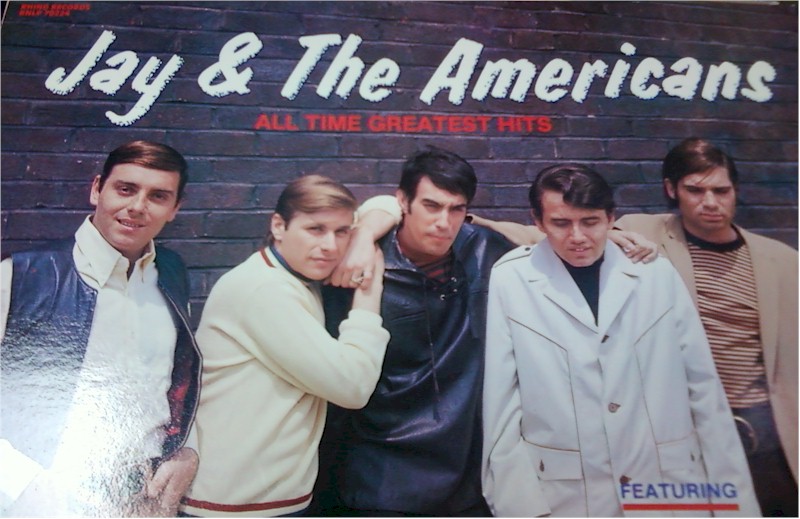
--------------------------------------------------------------------------------------- The final band for today is the wonderful New York pop group, Jay and the Americans. These guys are so great, I'm actually going to post two of their songs! Forming in the late-1950's, the original "Jay" Traynor left the group in the early 60's but after being replaced by David Black (who agreed to change his name to "Jay" Black), the group found their biggest success. In 1965, they had a #4 hit with the popular song "Cara Mia," which was actually first recorded by English singer David Whitfield in 1954. Meaning "my beloved" in Italian, Jay can sure belt this tune!
And the final song for the day by Jay and the Americans is "Come A Little Bit Closer," the group's most popular single to this day. Reaching #3 on the charts in 1964, this song was written by songwriting team Boyce and Hart, their first Top-10 hit before going on to write the early hits for The Monkees. Because of its popularity, Jay and the boys joined The Beatles on their first American tour, along with The Righteous Brothers. Whenever I hear this song, I'm reminded of my dad playing this tune really loud on the radio while on our family roadtrips. What a fun classic!