Last month, we sadly lost three iconic voices of the 1960s. On April 30th, American soul and R&B singer Ben E. King passed away at the age of 76. Growing up in Harlem, New York, King is best known as the singer and co-composer of "Stand By Me" (with Leiber and Stoller), which was a US Top-10 hit in 1961 and again in 1986. Just this year, King's original version was inducted into the National Recording Registry by the Library of Congress for being "culturally, historically, or aesthetically significant," just under five weeks before King's death. Who doesn't love this timeless classic?
In 1958, King became one of the principal lead singers of the R&B vocal group The Drifters. He sang lead on a succession of hits including "There Goes My Baby," "Save the Last Dance," and "I Count the Tears." Although he only recorded 13 songs with The Drifters, this is the sound I know so well and have loved from childhood. Seriously, this sound really drew me in as a kid, and I love these tunes so much, especially "Up On the Roof" (featured here), and "This Magic Moment," a Top-20 hit in 1960.
RIP, Mr. King! Your smooth voice is unforgettable.
-----------------------------------------------------------------------------------------------------------------------
Jack Ely was an American guitarist and singer, best known for singing The Kingsmen's version of "Louie Louie" (featured here). From Portland, Oregon, Ely was classically trained in piano and began playing guitar after seeing Elvis Presley on television. In 1959, he co-founded The Kingsmen and with them
recorded "Louie Louie" in 1963; Ely's famously incoherent vocals were
partly the result of his braces and the rudimentary recording method.
Before the record became a hit, Ely was forced out of the group and began
playing with his new band, The Courtmen. Ely passed away on April 28, 2015 at age 71. Often lip-synced by another band member, here's the original recording with Jack Ely's voice.
Farewell to the voice of The Kingsmen.
-----------------------------------------------------------------------------------------------------------------------
On April 14th, R&B and soul singer Percy Sledge passed away at the age of 74. He was best known for the song "When a Man Loves a Woman," a #1 hit on both the Billboard chart and R&B singles charts in 1966. It was awarded a million-selling, Gold-certified disc from the RIAA.
Having previously worked as a hospital orderly in the early 1960s,
Sledge achieved his strongest success in the late 1960s and early 1970s
with a series of emotional soul songs. In later years, Sledge received
the Rhythm and Blues Foundation's Career Achievement Award, and was inducted into the Rock & Roll Hall of Fame in 2005. Previously mentioned in this post here, it's worth acknowledging again Sledge's impressive songwriting skills as he improvised the lyrics during the recording of this song with minimal planning. Here's a great live performance of Sledge's signature song (looks like an introduction by Otis Redding to boot).
And here's his second biggest US hit, "Take Time to Know Her," which reached #11 in the 1968.
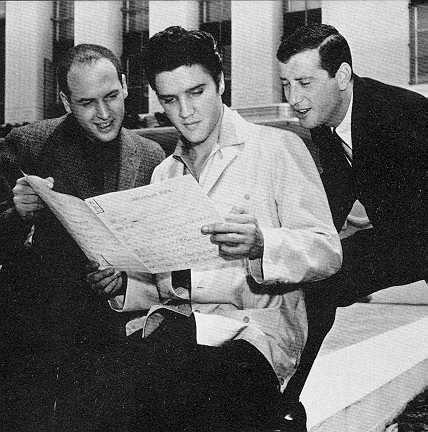
This week on August 22nd, the music world unfortunately lost TWO American songwriters: Jerry Leiber and Nickolas Ashford (discussed later in this post). Lyricist Leiber was the second half of the songwriting/record producing team with Mike Stoller (shown here with Elvis), and together, they created several ground-breaking hits that helped shape rock and roll history. Beginning their partnership in the early 1950s, their most popular songs include "Hound Dog," "Jailhouse Rock," "Kansas City," "Yakety Yak," "On Broadway" (with Mann & Weil), "Leader of the Pack" (discussed here), "Chapel of Love," and even "Stuck in the Middle With You." Smokey Joe's Cafe was a great Broadway musical revue from the mid-1990s that featured 39 pop standards written by Leiber & Stoller. Leiber passed away in Los Angeles at the age of 78 from cardiopulmonary failure. Thank you for the music, Jerry Leiber!
Here are some other hits by Leiber & Stoller during the 1960s. Co-written together with Ben E. King (co-principal singer with The Drifters), "Stand By Me" is one of the most-performed songs in history with over 7 million performances, and there are over 400 recorded versions by other artists. Released in May of 1961, this soul song went straight to #1 on the R&B charts and was a Top-10 hit on the U.S. charts twice. Among the 500 Greatest Songs of All Time, here's Ben E. King's TV performance of a true American classic (although I think it could do without the 'background dancers').
Another popular tune by Leiber & Stoller was "Love Potion No. 9," originally performed by The Clovers in 1959. The lyrics describe a man who goes to a gypsy for help in finding love, and she gives him a bottle of "love potion #9," which causes him to kiss everything he sees. This song was actually banned by some radio stations because of the line about "kissing a cop." The most popular version of this tune was performed by the Merseybeat/British Invasion group, The Searchers, who scored #3 on the U.S. charts with this song in 1965.
And I'll throw in one more Leiber & Stoller, just because I like this song. Originally performed by The Drifters (resulting in a major R&B hit in 1956), "Ruby Baby" later became a #2 hit on the Billboard charts when Dion released his version in 1962. Here's a TV performance of Dion's classic remake.
-------------------------------------------------------------------------------------------------
Nickolas Ashford and Valerie Simpson were a husband and wife songwriting/production team, as well as successful recording artists later in their career. First meeting at a Baptist church in 1963, the Ashford & Simpson partnership started out writing songs in the mid-1960s for artists like The 5th Dimension, Aretha Franklin, and Ray Charles, as well as joining the Motown staff in 1966. They wrote/produced most of the singles by vocal duo Marvin Gaye & Tammi Terrell, including "Ain't No Mountain High Enough" (featured on this past post). Including styles like R&B, soul, pop, disco, and gospel, they went on to create several songs into the 1970s and '80s. Throughout his career, Ashford played tambourine and percussion on hundreds of recording sessions, including dozens of Motown classics, like Marvin Gaye's "What's Goin' On." Ashford was 70 years old and passed away in New York this past Monday of complications from throat cancer.
Here are two tunes by the Ashford & Simpson team. Released in March of 1968, "Ain't Nothing Like the Real Thing" was first of two #1 hits on the soul singles charts for popular Motown duo Marvin Gaye & Tammi Terrell. Written and produced by Ashford & Simpson, they also provided background vocals for this song. Unfortunately, there are no live performances of these timeless love song on YouTube.
On his own, Ashford (and Frank Wilson) produced the mega hit "I'm Gonna Make You Love Me," which was recorded by Diana Ross & The Supremes with The Temptations in 1968. Quite a production including the Detroit Symphony Orchestra, this version hit #2 on both the U.S. Billboard charts and R&B charts in January 1969. Since there were no live performances by Diana Ross & The Supremes together with The Temptations, here is a duet performance by Ross with Stevie Wonder The Hollywood Palace around 1970.
New to The '60s Beat, Lou Christie was a popular American singer-songwriter known for his impressive, three-octave vocal range. Released in the spring of 1966, his song "Rhapsody In The Rain" caused a storm of controversy with its suggestive lyrics. With the opening melody inspired by Tchaikovsky's "Romeo and Juliet" (a music history refresher on that famous love theme here), the song tells of a teenager's regret over "what happened" in the backseat of a car during a rainstorm. Many radio stations banned the song, resulting in Christie re-recording a "toned down" version. Despite the ban, the song managed to hit #16 on the U.S. charts, with the controversy aiding its popularity. Backed by the familiar, female singers known as The Tammys, Christie effortlessly soars into falsetto vocals in this classic.
------------------------------------------------------------------------------------------------
A popular, American girl group in the mid-60s, The Shangri-Las were known for their heartbreaking, teen melodramas like their biggest hit, "Leader of the Pack." Although this is one of my least favorite songs of the decade (sorry Leiber & Stoller), it was a #1 hit in 1964 and is now even ranked among the 500 Greatest Songs of All Time. Despite its popularity, this song was banned by the BBC in the UK because it glorified motorcycle gangs. However, by the end of 1964, The Shangri-Las were quite an established act, getting to perform with The Beatles and touring with The Drifters and James Brown (who were surprised the girls were white) as well as with Dusty Springfield and The Zombies (whose drummer, Hugh Grundy, got to rev up the motorcycle backstage during the girls' live performances of this song). Here's Mary Weiss singing lead, backed by twin sisters Mary Ann and Marge Ganser, performing on I've Got a Secret with singer Robert Goulet on the motorcycle.
------------------------------------------------------------------------------------------------
Featured during Psychedelic Rock Week, we all know the story of how The Doors asked to change the lyrics to "Light My Fire" on The Ed Sullivan Show, however, Jim Morrison still sang "higher" in the live performance, resulting in their ban from the show. Since it's such a classic song, I thought I'd post the mellow, Latin-influenced cover version by the blind, Puerto Rican singer and guitarist, Jose' Feliciano. Released in 1968, Feliciano's interpretation brought him international success, reaching #3 in the US, and #1 in several other countries, earning him a gold disc, as well as two Grammy Awards including Best New Artist of the Year and Best Pop Song of 1969. However, Feliciano caused a lot of controversy that same year when he sang a slow, Latin-jazz version of the "Star Spangled Banner" at Game 5 of the 1968 World Series, resulting in the ban of his music by many radio stations.
------------------------------------------------------------------------------------------------
One of the biggest songs of 1967 was Van Morrison's "Brown Eyed Girl," his first single after leaving the British Invasion group Them (revisit Them, whose hit song "Gloria" was actually banned as well by a Chicago radio station in 1964). Written by the Northern Irish singer-songwriter, Morrison had to record an alternate, radio-edit version of this song since it was considered too racy and suggestive at the time, however, the original recording is widely familiar today, reaching over 9 million radio and TV air plays in 2009 (yeah, wow). Although this tune has become Morrison's signature song, he signed the record label without legal advice, and unfortunately has never received any of the royalties for writing or recording the song. Here's a very serious Morrison performing on American Bandstand.
----------------------------------------------------------------------------------------------
We'll finish this post with one of the premiere groups on Motown's roster, Martha Reeves and the Vandellas (check them out from Motown Week). Known for their harder, R&B sound, their 1964 release of "Dancing in the Street" is a signature song for the girls (and for Motown), and has become one of the most covered and popular songs in rock and roll history. Although it was recorded as an innocent dance single, the song was banned by many radio stations in concern that the song was a call to riot, as the Civil Rights Movement was just getting underway. Regardless, the song reached #2 on the U.S. charts, even becoming a global success. In 2009, it became one of 50 sound recordings to be preserved by the Library of Congress, and is #40 of the 500 Greatest Songs of All Time.
Happy 235th Birthday, America! In honor of Independence Day, we're going all out of with a patriotic blog for you, featuring a wide variety, as usual. Like all big American ceremonies and sporting events, we're starting off with our National Anthem, however, it's the bit "unorthodox" version of the "Star Spangled Banner" as performed by guitar legend Jimi Hendrix, live from Woodstock in 1969!
----------------------------------------------------------------------------------------------- Despite the unpopularity of the Vietnam War, one of the few songs from the 1960s to cast the military in a positive light was "Ballad of the Green Berets" by Staff Sergeant Barry Sadler. While recuperating from a led wound suffered as a medic in Vietnam, SSgt. Sadler wrote this song with Robin Moore in honor of Green Beret James Gabriel Jr., the first Native Hawaiian to die during the war, executed by the Viet Cong while on a training mission in 1962. During a year when British Invasion bands dominated the charts, this song was the #1 hit in the U.S. for five weeks in 1966 and sold over nine million records. Here's a performance of this wonderful, patriotic tune after its debut in January 1966:
------------------------------------------------------------------------------------------------- It only makes sense that the popular music group, Jay and the Americans, should have a patriotic number. Initially formed in late 1950s in New York, the group went through three different "Jays" over the course of their history, however their most famous lineup included Jay Black as their lead singer. The group's first hit with Black (though their second time on the charts) was with their 1963 single written by Leiber & Stoller, "Only in America," which peaked at #25. With singer Paul Anka giving the group a musical introduction, here's another classy performance on the Hullabaloo TV program by Jay and the Americans.
------------------------------------------------------------------------------------------------ Rising to prominence in the early 1960s with her beautiful renditions of traditional ballads and her distinctive vocal style, Joan Baez was American folk singer-songwriter from Staten Island, New York. Baez has performed publicly for over 52 years, releasing 30 albums, and is also remembered for introducing her audiences to the then-unknown fellow folk musician Bob Dylan early in her career. As a great interpreter of other people's music, here's her cover version of "The Night They Drove Dixie Down," originally a roots rock song recorded by The Band in 1969. Telling about the last ten days of the Civil War and the suffering of the South, this rendition struck a chord with its listeners, reaching #3 on the charts in 1971.
----------------------------------------------------------------------------------------------- American funnyman Stan Freberg has been known for many things including comedian, recording artist, animation voice actor, radio personality, puppeteer, and author, just to name a few. Beginning his career in 1944 as voice actor for Warner Bros. cartoons, he went on to become an on-screen actor in comedy films in the 1950s, followed by making satirical recordings for Capitol Records. In 1961, he released Stan Freberg Presents The United States of America: Vol. One, The Early Years, a comedy album that combined dialogue and song in a musical theater format, which parodied the history of the United States from 1492 to the end of the Revolutionary War in 1783. Below, I've posted the 'Declaration of Independence' sketch from this album, which was particularly a satire of McCarthyism. If you have the time, this classic stuff is worth a listen.
------------------------------------------------------------------------------------------------ Singer-songwriter Dion (Dion DiMucci) was one of the most popular American rock and roll performers of the pre-British Invasion era with over a dozen Top-40 hits in the late 1950s and early '60s (like "Runaround Sue"). As the public's taste changed, he regained popularity in the late '60s and early '70s with more mature music, breaking from his teen idol stigma. Released in late 1968, Dion had another major American hit with the folk rock song "Abraham, Martin, and John," a tribute to the icons of social change, Abraham Lincoln, Martin Luther King Jr., John F. Kennedy, and Robert F. Kennedy. Written by Dick Holler, it was in response to the recent assassinations of MLK Jr. and RFK in April and June of that year. The original recording is arranged nicely, opening with oboe and violin, as well as several harp flourishes, however, this is a even mellower performance by Dion with choral accompaniment on the Smothers Brothers Comedy Hour.
------------------------------------------------------------------------------------------------ Known for starting the "historical ballad" craze of the late 1950s and early '60s, Johnny Horton was an American country music and rockabilly singer that had several major successes. He is greatly remembered for his contributions in those genres, however, his career was short-lived when he died in 1960 at the age of 35 (he started having premonitions that he would be killed by a drunk and was in fact killed in a car accident caused by a drunk driver, yikes). His most notable song was "The Battle of New Orleans," which was released in 1959 and earned him a 1960 Grammy Award for Best Country & Western Recording. With comical lyrics, this fun tune describes the 1815 Battle of New Orleans from an American soldier's point of view. Ranked among the Recording Industry Association of America's "Songs of the Century" in 2001, this is the #1 country song to score the Billboard chart, and clearly remains a wonderful, American classic. (I have my dad's old 45 and apparently those are worth a lot!)
Happy 4th of July from The '60s Beat, and thinking of all the men and women who sacrificed for our freedom!

 In 1958, King became one of the principal lead singers of the R&B vocal group The Drifters. He sang lead on a succession of hits including "There Goes My Baby," "Save the Last Dance," and "I Count the Tears." Although he only recorded 13 songs with The Drifters, this is the sound I know so well and have loved from childhood. Seriously, this sound really drew me in as a kid, and I love these tunes so much, especially "Up On the Roof" (featured here), and "This Magic Moment," a Top-20 hit in 1960.