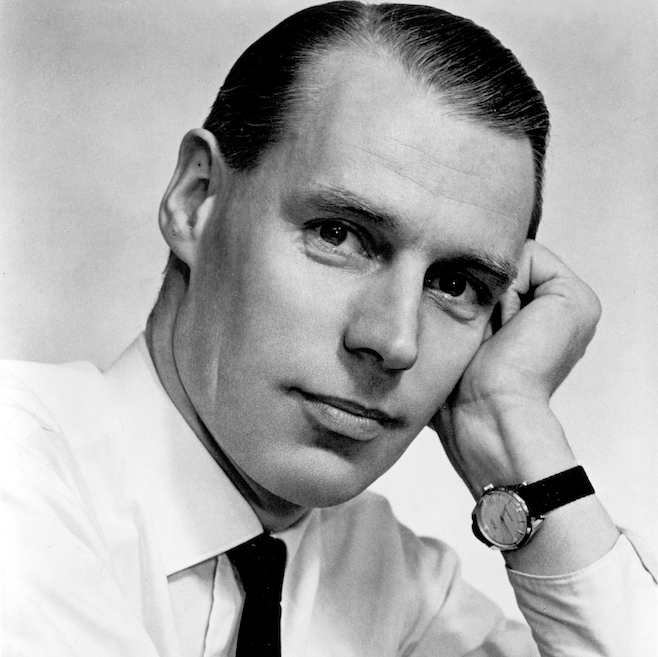
Well, quite late to get this post up, but certainly not forgotten. Earlier this year on March 8th, the world lost 90-year-old Sir George Martin - English record producer, arranger, composer, conductor, audio engineer and musician. In a career that spanned seven decades, Martin was one of music's greatest talents, working with numerous artists including Gerry & The Pacemakers, Billy J. Kramer & The Dakotas, Cilla Black, Shirley Bassey, Peter Sellers, Jeff Beck, Neil Sedaka, Kenny Rogers, Cheap Trick, Elton John, Celine Dion, and more. However, he is most fondly remembered as The Fifth Beatle, as his greatest fame and influence comes from his seven years working with The Beatles.
Martin's more formal musical expertise helped fill the gaps between the Beatles'
unrefined talent, and the sound which distinguished them from other
groups and added in their success. Most of the
Beatles' orchestral arrangements and instrumentation (as well as
frequent keyboard parts) were written or performed
by Martin, in collaboration with the less musically experienced band. It was Martin's idea to put a string quartet on "Yesterday", against McCartney's initial reluctance.Martin played the song in the style of Bach to show McCartney the voicings that were available. Of course, Paul McCartney's songwriting is nothing to sneeze at either, but the collaboration not only led to a #1 US hit in 1965, but also has been voted the #1 pop songs of all time.
His work as an arranger was used for many Beatles recordings. For "Eleanor Rigby" (previously featured here), he scored and conducted a string accompaniment inspired by Bernard Herrmann (composer for Hitchcock thriller, Psycho).For "Strawberry Fields Forever" (featured here), he and recording engineer Geoff Emerick turned two very different takes into a single master through careful use of vari-speed and editing. For "I Am the Walrus" (here), he provided a quirky and original arrangement for brass, violins, cellos, and the Mike Sammes Singers vocal ensemble.On "In My Life," he played a speeded-up baroque piano solo.He worked with McCartney to create the orchestral 'climax' in "A Day in the Life", and he and McCartney shared conducting duties the day it was recorded. (Sidenote: gotta love seeing Rolling Stone Mick Jagger, Monkee Mike Nesmith, and Donovan all in attendance during the recording and filming of this promo video!).
Martin contributed integral parts to other songs, including the piano in "Lovely Rita," the harpsichord in "Fixing a Hole," the old steam organ and tape loop arrangement that create the "Pablo Fanque" circus atmosphere John Lennon requested on "Being for the Benefit of Mr. Kite!" (both Martin and Lennon played steam organ parts for this song). To create the circus-like atmosphere of the song, Martin made tapes
of old calliope records, then had the recording engineer
cut the tapes into short segments, throw them in the air, and splice
the pieces together at random. The result was a swirling sound collage
that creates the disorienting feeling of a whirligig at a fair. Mr.
Martin himself played the swirling organ runs that follow the line, “And
of course Henry the Horse dances the waltz,” recorded at half-speed. Pretty cool, if you ask me! Here's the song used the Beatles' "Love - Cirque du Soleil" show in Las Vegas (this part is actually a bit creepy for me and I had to look up the meaning behind some of the costumes. But that's for another day...).
Since the early 1960s. Martin composed, arranged, and produced film scores like the instrumental scores of A Hard Day's Night (1964, for which he won an Academy Award Nomination) the Bond classic Live and Let Die (1973), and many more. He also composed this awesome song below, "Theme One" which was used as the introduction on BBC Radio 1 for many years beginning in 1967. This composition makes great use of the pipe organ, heavy brass, and my favorite psychedelic effect of "flanging." Paul McCartney once commended Martin by saying: "George Martin [was] quite experimental for who he was, a grown-up." Check out the super-cool "Theme One:"
I could go on, but this could take all week.
The above is just a blip from the career of this legendary music producer.
Thank you to the Fifth Beatle for your outstanding contribution to the music industry.
Farewell, Sir George Martin. You shall be missed.
Disclaimer: As it has taken me so long to finally finish this post and I was lacking creativity, some content was taken directly from good ol' Wikipedia.
To celebrate my baby girl's 4th birthday today, we're posting some of her favorite songs this year. Before you leave this page and think "oh brother...," Zoe has impressive taste in music, which all you '60s fans will surely approve. Yes, that's my girl listening to The Zombies' Odessey And Oracle album on our turntable. She requested it, so I had to document the evidence, of course! While she still enjoys the songs that were in her birthday feature last year (here), here are the newest ones in her playlist.
Before I even knew what "the birds and the bees" really meant, I loved to sing along to this Jewel Akens' song. Now it cracks me up to see Zoe enjoying the same catchy tune. Reminiscent of 1950s honky tonk-style hits (like Fats Domino's "Blueberry Hill"), this international hit was released in 1964 and reached #2 on the US Cash Box singles chart and #3 on the Billboard chart. Although considered a one-hit wonder, Akens did have other minor hits and even toured with The Monkees. He just passed away this past March at the age of 79. Here's a classic TV performance of "The Birds & the Bees."
It's not surprising that my daughter loves one of the most influential records in pop music history, but her favorite selection from The Beach Boys' 1966 Pet Sounds is not one of the popular ones. Written by Brian Wilson and Mike Love with Brian as the producer, "I'm Waiting for the Day" is considered art rock and is very experimental as a combination of an orchestral ballad and a modern rock song. Using our beloved "Wrecking Crew" studio musicians, this positive song features a very exciting instrumentation such as timpani, bongos, strings, flute, English horn, ukelele, organ, bass, and drums. Nothing like driving in your car and hearing your child singing all the lyrics.
Here's another surprising tune from Zoe's playlist: Harry Nilsson's "Mr. Tinker." While his 1968 album Aerial Ballet includes great songs like "Everybody's Talkin'" (a huge hit in '69) and "One" (later covered by Three Dog Night), my daughter is drawn to this beautiful and melancholy number. The arrangement and instrumentation is excellent and so moving as the lyrics tell a story of Mr. Tinker the tailor. Nilsson is such a unique songwriter and I love his variety; even cooler that my kid enjoys the deep tracks like this. And we're in good company: he was the favorite artist of The Beatles!
I guess I must play quite a bit of '60s Baroque Pop around the house because Zoe has caught on to
how great it is! While she does love the well-known "Walk Away Renee"
by The Left Banke, she really enjoys their second hit single, "Pretty
Ballerina." Released in December of 1966 and reaching #15 on the Billboard
chart, this haunting tune is not your typical pop song of the era, featuring
beautiful string/oboe accompaniment and the soaring vocals of Steve Martin
(Caro). Definitely an under-rated band!
While it's appropriate that my kid has a
Bubblegum pop tune amongst her favorites, I think the underlying reason she
loves this song may be due to the fact that she thinks it's about a large,
furry Star Wars character of the same name. In March of 1969, Ohio Express's
"Chewy Chewy"became their second million seller and reached #15 in
the US, #6 in Australia, and #2 in Canada. While Ohio Express was a studio
creation by Super K Productions, they had their biggest success during this time
with singer Joey Levine, however, the touring group included a completely
different of musicians. Nothing like a little Bubblegum to get the happy juices flowing.
This next gem comes from the wonderful 1968 album The Kinks Are the Village Green Preservation Society. A collection of thematic vignettes of English town and hamlet life, written by The Kinks' own Ray Davies, "Animal Farm" is wonderful, 'pastoral escape' that makes excellent use of the Mellotron, simulating string and woodwind backing tracks. Although the record is widely considered one of the most influential and
important works by the Kinks, it failed to chart upon release, and only
sold about 100,000 copies; it was released November 22, 1968, the same day The Beatles released their White Album. Now this Kinks album is ranked amongst Rolling Stone's 500 Greatest Albums of All Time.
Another under-rated album now in that list of the 500 Greatest Albums of All Time, The Zombies' Odessey and Oracle definitely caught my daughter's attention but with the most unexpected song. Recorded at Abbey Road Studio in 1967, "Beechwood Park" has a smooth groove complete with a mellow guitar intro, dreamy lyrics, and the breathy vocals of the talented Colin Blunstone. Although one of the biggest songs of the '60s came from this album ("Time of the Season"), Zoe is fascinated by this extraordinary beauty by my beloved Zombies.
And seriously, what kid wouldn't like a song about an octopus's garden? From The Beatles' last recorded album, Abbey Road, released in 1969, "Octopus's Garden" was drummer Ringo Starr's most successful songwriting effort, and was inspired by a trip to Sardinia aboard Peter Sellers' yacht (yes, the hilarious British actor, long story). I still have my parents' original Abbey Road album and now course, the love of this childhood favorite of mine has been passed down in the family.
Zoe has a dear friend named Caroline, so as soon as she caught the lyrics of this Neil Diamond classic, she requested to hear "Sweet Caroline" every time we drove in the car (where we do most of our music-listening). Released in September of 1969, this soft rock song reached #4 on the Billboard chart and eventually went platinum for sales of one million singles. In recent years, Diamond revealed that he was inspired by a picture of President JFK's daughter, Caroline, riding a horse as a young child. In recent years, the song has become popular at sporting events, especially at the Boston Red Sox home games.
---------------------------------------------------------------------------------------------------------------- An American orchestra leader and film composer, Hugo Montenegro is best known for his interpretations of the music from Spaghetti westerns, especially the cover version of the main theme from the 1966 film The Good, the Bad, and the Ugly. Originally composed by Ennio Morricone, Montenegro's version was his biggest pop hit in 1968, reaching #2 on the Billboard chart, #3 in Canada, and four weeks at #1 in the UK. Zoe loves this song, especially the whistling, and refers to it as "the cowboy song." This was also a favorite of my dad's, and our family had a joke about the lyrics, or what I suppose are lyrics. We called this song "Egg roll," because it sounded like a bunch of cowboys attempting to talk while eating a hot egg-roll. Seriously, what are they saying/grunting? Here's one of the most iconic scores in film history with clips from the classic movie.
While Zoe does enjoy The Temptations' "My Girl," she is even more interested in the lesser-known cover version of the same song by The Mamas & The Papas. Originally written by Smokey Robinson and Ronald White, this tender interpretation was first heard on the group's 1967 album Deliver, and was later released as the B-side of "Do You Wanna Dance" in 1968, although it charted rather poorly. With a new, ascending vocal intro, this version is a textbook-example of The Mamas & The Papas' harmonious sound that can surely put a smile on anyone's face. Gotta love my kiddo's variety!
Last week, my husband took me to see The Beatles' Love Cirque du Soleil production at The Mirage in Las Vegas. The French-Canadian contemporary circus company is known for fantastic shows, but this 2006 theatrical production combines the re-produced and re-imagined music of The Beatles with the interpretive, circus-based artistic and athletic stage performance. A joint venture between Cirque and The Beatles' Apple Corps Ltd, the music directors are Sir George Martin (producer of nearly all of The Beatles' records) and his son, record producer Niles Martin. I had heard rave reviews of the show, but we were truly amazed at the unbelievable acrobatic and aerial performers paired with the perfect soundtrack. The show samples 130 songs from The Beatles' catalog to create 26 musical pieces, and the songs are mixed so that the lyrics and instrumentation blend from one song to the next. The loose storyline traces the band's biography in board strokes and incorporates characters inspired by their songs including Sgt. Pepper, Eleanor Rigby, Her Majesty, Lady Madonna, Lucy, Nowhere Men, and so on. For Beatles fans, this stellar production is a must-see, and even for the non-Beatles fan, the awesome sights and sounds will entertain for the entire 90 minutes.
Enjoying the colorful entrance to the theater.
Stock photo from the show.
Here's the show's trailer, just to give you a taste of the impressive circus with Beatles-inspired costumes and psychedelic sets.
As someone who knows the music of The Beatles by heart, I was very impressed with the re-working of certain songs. One of my favorite moments was hearing a new version of "While My Guitar Gently Weeps," which matches the first studio demo from 1968 with a new string arrangement written for Love by George Martin. In contrast to George Harrison's original blues rock song, here's the hauntingly beautiful version from the show.
Also, I found this excellent clip from a documentary about the show ("The Beatles In Love") which discusses the use of this new version, and includes segments from inside the recording studio and from the actual production.
Another moment I really enjoyed in the show was the "Octopus' Garden" scene featuring Ringo's beloved tune and a mesmerizing underwater sequence. This video clip from the show doesn't do it justice. The lyrics from this song's intro are first overlapped with the string part from the "White Album" song "Goodnight."
My husband hanging out with a Blue Meanie (from the Yellow Submarine film) in the gift shop.
Definitely a groovy night of astounding sights and sounds!
For all you devoted Beatles fans out there, be sure to check out this excellent post here by Vegas.com in honor of 50 years of Beatlemania in America and the upcoming anniversary of The Beatles' first trip to Las Vegas. Half a century later, this city still embraces a LOVE for The Beatles; so much fun!
This past December, the music world lost two more talented (and quite contrasting) performers of the 1960s. The day after Christmas, St. Louis R&B singer Fontella Bass passed away after complications of a heart attack at the age of 72. She was best known for her 1965 hit single, "Rescue Me," which reached #1 on the R&B chart, #4 on the Billboard Hot 100, and #11 in the UK. Although songwriter credit is given to Raynard Miner and Carl William Smith at Chess Studios in Chicago, many sources also credit Bass herself as a co-writer. Recorded in just three takes, the call-and-response sounds of "umm, umm" were unintentional and were in place of forgotten lyrics during the taping. This song also included Maurice White, later of Earth, Wind & Fire, on drums. With her fantastic vocals on this soul/pop tune, here's the late Fontella Bass performing on Shindig! in 1965.
-------------------------------------------------------------------------------------------------------------------------
Earlier in the month on December 11th, the best-known contemporary Indian musician Ravi Shankar passed away at the age of 92. In the mid-'50s and '60s, Shankar toured Europe and America playing classical Indian music on the sitar, and recorded albums with World Pacific Records. The Byrds also recorded at the same studio and heard Shankar's music, which led them to incorporate some of its elements in theirs, introducing the genre to their friend George Harrison of The Beatles.
Harrison became interested in Indian classical music, bought a sitar, and used it to record the song "Norwegian Wood (This Bird Has Flown)". This led to Indian music being used by other musicians, thus creating the raga rock trend and impacting psychedelic music. In 1966, Harrison went to India for six weeks to study the sitar with Shankar, an association which greatly increased Shankar's popularity, making him "the most famous Indian musician in the world." In 1967, he won a Grammy Award for Best Chamber Music Performance for West Meets East, and performed at the Monterey Pop Festival where he was introduced to new generation of music fans. Here's an excerpt from his four-hour performance (whow!) at the Pop Festival, as captured for the historic D. A. Pennebaker documentary (Shankar appears at about 7:00 into the clip).
Farewell to these talented performers, and thanks for the music!
Today's first protest song comes from one of our favorite roots rock bands Creedence Clearwater Revival, known for their dedication to homegrown American music. Released in September 1969, CCR released "Fortunate Son," a double A-sided single with "Down on the Corner," and first reached #14 on the US chart the week before Billboard changed its methodology on double-sided hits. Eventually, this track and its reverse side combined peaked at #3 by the end of the year, and ["Fortunate Son"] has since been ranked #99 on Rolling Stones' list of the "500 Greatest Songs of All Time." This roots/blues rock song was popular during the Vietnam War and is included in several Vietnam films and video games. Written and produced by lead singer John Fogerty, it is the perspective of a man who is being drafted who is not "fortunate" enough to be the son of a Senator or a millionaire. Featured on The Ed Sullivan Show, here's an excellent live performance that sounds just like the recording!
Before the dissolution of The Beatles, John Lennon and Yoko Ono formed a conceptual supergroup in 1969 called the Plastic Ono Band with various members including Eric Clapton (guitarist on the left in this clip), artist Klaus Voormann, future Yes drummer Alan White, and The Who's drummer Keith Moon, among others.Written by Lennon and recorded during his 'Bed-In' honeymoon, "Give Peace a Chance" was released in July of 1969 as his first solo single while still a member of The Beatles. Peaking at #2 in the UK and #14 in the US, this song quickly became the anthem of the anti-Vietnam War movement, and is one of Lennon's most famous songs to be included on the Rock & Roll Hall of Fame's list of the 500 Songs that Shaped Rock and Roll. Credited to the Plastic Ono Band (an identity to describe works by Lennon and Ono and anyone else who happened to be performing with them), here's a live performance in Toronto in '69, which supposedly gave Lennon the confidence to tell the other Beatles a few days later that he was leaving the band.
Often referred to as the "British Bob Dylan," Scottish singer-songwriter Donovan covered this next protest song in the mid-60s. Originally written and recorded by Canadian singer-songwriter Buffy Sainte-Marie in 1964, "Universal Soldier" didn't gain much attention until the budding folk singer Donovan recorded his version and released it as a single in August of 1965, reaching #5 on the UK charts. Sainte-Marie said this folk song was about "individual responsibility for war and how the old feudal thinking kills us all." Since, this tune has been recorded by several other artists including The Highwaymen, Glen Campbell, Joan Baez, and Phil Ochs, as well as several foreign singers. Performing before a captive audience, here's Donovan's version of the consummate anti-war song.
We'll conclude today's post with an upbeat one by American blue-eyed soul group The Rascals (initially know as The Young Rascals). Becoming a big hit in the turbulent summer of 1968, "People Got to Be Free" spent five weeks at #1 in the US, as well as reaching #14 on the Billboard Black Singles chart, and eventually sold 4 million copies. Written by group members Felix Cavaliere and Eddie Brigati, this horn-punctuated plea for tolerance and freedom struck a particular chord in the wake of the assassinations of Martin Luther King Jr and Sen. Robert F. Kennedy. After the release of this song, The Rascals refused to tour on segregated bills, and if an African American act was not included at their concerts, the group would cancel several shows in protest. With Cavaliere on lead vocals and rock organ, here's another dynamic live performance by The Rascals in 1969.
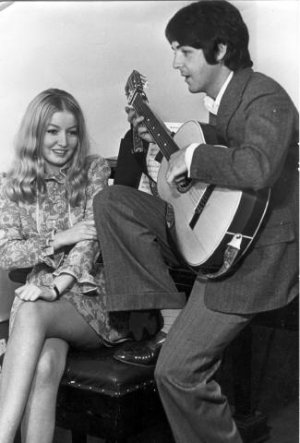
In a completely, unrelated transition to our next fabulous series (hopefully beginning later next week), here's a pretty little gem of a song, featured as our Song of the Day. Although we just talked about this cute little Welsh folk singer last month, this Mary Hopkin tune has been in my head lately. As we know Hopkin was one of the first artists signed to The Beatles' Apple record label and Paul McCartney was her producer, there's no mistaking which mop-top wrote this beauty. Credited to Lennon-McCartney (but of course written solely by McCartney) Hopkin's single reached #2 on the UK chart in March of 1969, and was only prevented from reaching the top position by The Beatles' single "Get Back." The song also reached #13 on the US singles chart. Here's a lovely live performance by the beautiful Ms. Hopkin (and another cute video here with footage of Paul coaching Mary in the recording studio).
Although never officially released by either The Beatles or Paul
McCartney, there are bootleg recordings of McCartney's original demo
version recorded for Hopkin. Here's one posted on YouTube with a nice photo montage of this beloved Beatle.
And how cool is this: McCartney's original manuscript on Apple stationary! (Courtesy of Life of the Beatles Blog)
Happy New Year!!
We're starting bright and early (12:01am PST) with a post of "Hello" songs to greet 2012!
First introduced here during the British Invasion Series, The Tremeloes are the other "beat" band from Liverpool, who were heavily influenced by Buddy Holly & TheCrickets. Like The Beatles, each member of the group was a strong singer, and they combined rock and roll with several other styles of music. Having a successful career in their native UK with nine Top-20 hits, their songs were more popular among young music fans and their parents rather than rock music fans. Released in 1969, "Hello World" is a fun one that reached #14 on the UK charts, featured in this live performance from 1970 (including "My Little Lady" and "Here Comes My Baby").
------------------------------------------------------------------------------------------------ So I just recently discovered this San Francisco group (thanks again, Uncle Bill!), and I can't believe I'd been missing out on this delightful music. Sopwith Camel is one of the first "psychedelic" rock bands to get a recording contract with a national record label, however, their "old-timey" sound was more reminiscent of the early songs of The Lovin' Spoonful rather than typical psychedelia. From their first album (and only album from the '60s), the vaudevillian "Hello Hello" became the first hit single to emerge from the San Francisco rock scene, reaching #26 on the US pop charts in January 1967 and #9 in Canada. Playing vintage rock in a wintery setting, here's the only footage I've seen of these guys from this era.
------------------------------------------------------------------------------------------------ This next classic 'Hello' song is brought to you by The Doors from their 1968 album Waiting for the Sun. Released as a single that June, "Hello, I love You" reached #1 in the U.S. where it sold over a million copies, and hit #1 in Canada. It was also the group's first big hit in the UK, hitting #15 on the chart. While some skeptics believed the song's musical structure was stolen from The Kinks' "All the Day and All of the Night", which does have a similar riff, Doors guitarist Robby Krieger (who wrote this song with all three band mates) said the song's vibe was taken from Cream's "Sunshine of Your Love. Here's some great footage of a rockin' psychedelic classic.
------------------------------------------------------------------------------------------------ And of course, it's only appropriate to end this post with "Hello, Goodbye" by The Beatles. Released in November of 1967, this Paul McCartney tune scored #1 on the charts in the US, UK, France, and Norway, and was the Christmas #1 (UK) of that year. Directed by McCartney, three promotional films were produced, but they were not allowed to air on the BBC because of Musician's Union strict rules about mimed performances, however, one was featured on The Ed Sullivan Show in the US. Wearing their infamous "Sgt. Pepper" uniforms, here's the fun, pop rock song that is basically about "everything and nothing" at the same (as explained by McCartney upon the song's release).
And on that note, Happy New Year, Farewell to 2011, and Hello 2012!
Well, I realize it's still November, but if you love the sounds of the Christmas season, you should enjoy the next several weeks here at The '60s Beat. I'll try to keep the descriptions more brief, but we all know how rare that is on this blog...
To kick off the Christmas spirit, how about a cheery tune from that favorite vocal surf pop group, The Beach Boys! Written by Brian Wilson and Mike Love, "Little Saint Nick" went to #3 on the Billboard Christmas charts after its release in December of 1963. It borrows its rhythm and structure from the group's "Little Deuce Coupe," a hit a few months prior. Although that year saw a media-hushed Christmas as the country mourned the recent death of JFK, the single did go into the Top Tens for record sales in dozens of cities, and eventually became an unofficial million-seller. This footage is definitely from later in the '60s when Love started sporting a beard.
------------------------------------------------------------------------------------------------- And here are some of our favorite Brits with a Christmas greeting, wishing Beatle fans a "Happy Crimble!" 'Crimble' was a slang word for Christmas coined by The Beatles in 1964 (more likely John Lennon, who enjoyed wordplay), and has come into general use among Liverpudlians. The greeting is followed by an excerpt of "Christmas Time (Is Here Again)," a song written by all four Beatles for their 1967 fan club Christmas record. These Christmas records included spoken and musical messages on a flexi disc and were issued each year between 1963 through 1969 for official Beatle fan-club members in the UK and US.
------------------------------------------------------------------------------------------- This next seasonal tune comes from an album that's a 1960s Christmas essential: The Four Seasons' Christmas album from 1962. Done in the style of "Big Girls Don't Cry," a #1 hit from that same year, this falsetto version of "Santa Claus Is Coming To Town" is a holiday classic. Although there isn't any live footage with the audio, here's a photo montage of many Santa Clauses to accompany this Christmas standard written by John Frederick Coots and Haven Gillespie back in 1934!
------------------------------------------------------------------------------------------------ And for this post's finale, you get two more Christmas videos, brought to you by the zany and lovable Monkees. This first holiday clip comes from their 1967 Christmas episode where the foursome try to instill the spirit of Christmas in a cynical little boy (played by Butch Patrick a.k.a. "Eddie Munster"!).
Finally, this last clip (also from the Christmas episode) is a impressive performance by The Monkees as they sing an a-cappella rendition of the 16th Century Spanish carol, "Riu Riu Chiu." Sung in Olde Spanish, the lyrics refer to the nativity of Jesus and the virgin birth.
Although this post is kind of concluding on a melancholy note, I think you'll enjoy this Christmas beauty. (And in case you were wondering, they're holding incense; this was a family show, so these guys wouldn't be caught dead smoking!). Peace, Love, and Happy Christmas!
Flower Power: Part 7 (Final)
One of the ultimate Flower Power songs would be The Beatles' "All You Need Is Love," but since that love anthem was already featured here, we'll take a look at another Beatles' song, a classic of psychedelia. Written mainly by John Lennon (credited to Lennon/McCartney), "Lucy in the Sky with Diamonds" comes from biggest-selling album of the 1960s, Sgt. Pepper's Lonely Hearts Club Band. After its release at the beginning of the Summer of Love in June 1967, the BBC banned this song suspecting its title was referencing drugs (LSD), however, Lennon always denied that claim. Lennon's son, Julian, had inspired the song with a drawing of his school-friend Lucy, floating "in the sky with diamonds." The lyrics are a surreal and lavish daydream, accompanied by a complicated arrangement featuring a tamboura (stringed instrument) played by George Harrison, and a counter melody on organ by McCartney. In 1974, Elton John released a cover version of this tune (discreetly featuring John Lennon on backup vocals and guitar), and it is the only Beatles cover song to reach #1 on the Billboard chart. From The Beatles' 1968 animated feature film Yellow Submarine, here's "Lucy in the Sky with Diamond."
------------------------------------------------------------------------------------------------- Next up, this light-hearted, groovy tune comes from the classic American folk duo, Simon & Garfunkel. About the Queensboro Bridge in New York City, "The 59th Street Bridge Song (Feelin' Groovy)" comes from their third album Parsley, Sage, Rosemary and Thyme released in October 1966, which reached #4 on the album charts and is considered on of the greatest albums of all time (I even recently purchased it at a used record store!). Written by Paul Simon and featuring musicians from the Dave Brubeck Quartet, the message of this folk rock song is delivered right in the first verse of the song: "Slow down, you move too fast." A popular cover version was recorded by Harpers Bizarre the following year, making it into sunshine pop arrangement. From the Smothers Bros. Comedy Hour, here's Simon & Garfunkel, with a little "accompaniment" by Tommy and Dick Smothers.
------------------------------------------------------------------------------------------------ Known for venturing into a wide variety of musical genres, Scottish singer-songwriter Donovan was one of the first British pop musicians to adopt a flower power image. Influenced by US West Coast bands (like Jefferson Airplane and The Grateful Dead), he recorded one of the first examples of psychedelia at Abbey Road Studios in January of 1966. Released later that summer in the U.S., "Sunshine Superman" was a psychedelic folk song that reached #1 on the US Billboard charts (#2 in the UK), selling over 800,000 copies in just the first six weeks, eventually earning a gold disc. Written for his future wife, Donovan's lyrics mention two DC Comics superheroes, Green Lantern in addition to Superman. The eclectic arrangement was quite innovative with the prominent use of the harpsichord and sitar, combined with a funky, conga-like back-beat. Described as " the quintessential bright summer sing along," here's a Donovan classic.
------------------------------------------------------------------------------------------------ And for our final band of Flower Power Month, it's American blue-eyed soul group from New Jersey, The Young Rascals. These guys found themselves with one of their biggest hits at the beginning of the Summer of Love when "Groovin'" spend four weeks at #1 on the charts in May of '67, earning a certified gold record by June. Written by group members Felix Cavaliere and Eddie Brigati with lead vocals by Cavaliere, this classic tune is a slow, relaxed groove and has become one of the group's signature songs. Based on Cavaliere's newfound interest in Afro-Cuban music, the instrumentation features a conga, harmonica, and a Cuban-style bass line. Resulting in a different sound from The Rascals' white-soul origins, the head of their record label originally did not the song released, however, the song (and the group) proved to have crossover appeal when "Groovin'" hit #3 on the Billboard Black Songs chart. Considered one of the 500 Songs that Shaped Rock and Roll (by Rock and Roll Hall of Fame), it is also a recipient of a Grammy Hall of Fame Award. Great tune, but to be honest, as a kid, I always misheard the line, "life would be ecstasy, you and me endlessly" as "you and me and Lesley!" (wait, who the heck is Lesley?).
If you enjoyed Flower Power Week, be sure to revisit some past posts featuring other Flower Power-type songs such as The Turtles' "Happy Together", The Mamas & The Papas' "California Dreamin'" and The Byrds' "Turn! Turn! Turn!" both featured here, and Procol Harum' "A Whiter Shade of Pale".
Banned Songs: Part 1
So how about a three-part segment of songs that were either banned or edited for the radio due to questionable lyrics?!
For anyone that knows a little about The Beatles, they probably can guess a few of their tunes were banned including "A Day in the Life" (for lyrics about a graphic car accident) and "Lucy in the Sky with Diamonds" (which was thought to be a drug reference, however, it was based upon drawing by John Lennon's son). "I Am the Walrus" was another of those banned songs, although it's quite clear what substance contributed to some of these lyrics. Released in November 1967 as the B-side to "Hello, Goodbye," Lennon composed this psychedelic rock song by combining three songs he had been working on. He also added a verse of nonsensical words when he had a learned that a teacher at his old primary school was having students analyze his lyrics. The walrus is a reference to Lewis Carroll's "Walrus and the Carpenter" (from the sequel to Alice In Wonderland), however, Lennon was 'bummed' when he later learned that the walrus was the 'bad guy.' From their 1967 TV film Magical Mystery Tour, here's a Beatles tune banned by the BCC for a couple of inappropriate lines.
------------------------------------------------------------------------------------------------ And here's Peter, Paul, and Mary, the beloved folk group just discussed a few posts ago. Although they were often politically outspoken in their lyrics, their only song to actually be banned was "Puff, the Magic Dragon," a simple song about the loss of childhood innocence. Based upon a 1959 poem written by 19-year-old Cornell student Leonard Lipton, an acquaintance of Peter Yarrow (of the trio), Lipton was given half of the songwriting credits along with Yarrow after the song's release in 1963. Throughout the sixties, there was lots of speculation about the lyrics referring drugs leading to its ban in several countries, but the authors consistently deny this rumor. Since, this song is considered a popular children's classic, and has become a part of American and British pop culture.
------------------------------------------------------------------------------------------------ From Portland, Oregon, The Kingsmen were a garage rock band best known for their 1963 recording of Richard Berry's "Louie Louie." It held the #2 spot on the Billboard chart for six weeks and is still well-known today. However, because of lead singer/rhythm guitarist Jack Ely's indistinguishable enunciation of the lyrics (try saying that ten times fast!), the song became immediately controversial, with millions of teenagers and their parents thinking it was "dirty." As a result, the governor of Illinois banned it, and the FBI even got involved investigating the lyrics, but found nothing. The words are, in fact, innocent, which you can actually hear a bit clearer in this video footage from Shindig! compared to the garbled vocals on the original recording.
------------------------------------------------------------------------------------------------ Finally, we all know that The Rolling Stones were the 'bad boys' of the British Invasion as their music was often quite suggestive. Written by Mick Jagger and Keith Richards, "Let's Spend the Night Together" was released as a double A-sided single with "Ruby Tuesday" in January 1967, and was definitely controversial at the time. On the Ed Sullivan Show, the band was initially not allowed to perform this song, but a compromise was met by changing the lyrics to "let's spend some time together." However, during the live performance, Jagger clearly rolled his eyes at the TV camera every time he sang that line (seen in this footage below). This, combined with their antics backstage (something about wearing Nazi uniforms), Ed Sullivan announced the band was banned for performing on the show again.
Happy Birthday to my little sister, Monica! (A photo of us from many moons ago...)
From their 1968 album The Kinks Are The Village Green Preservation Society (one of their most influential records I might add, even included amongthe 500 Greatest Albums of All Time), here's "Monica," a little song The Kinks wrote just for my sister :)
And how about a little Birthday song from those other crazy, English lads? And not only do you get one, but TWO Birthday songs by The Beatles! The first is a quick yet rare sound clip of The Beatles singing "Happy Birthday," and I believe it's sung to the Saturday Club, a venue the band would often play during their early years.
And of course, you knew this was coming: the infamous "Birthday" from The Beatles, a.k.a. the "White Album," released in November 1968.
I was going stop there but why not end with an inside joke between sisters? Written by Mike Nesmith and released on their second album in 1967, here's Micky Dolenz singing "Mary, Mary" with The Monkees, our other childhood favorites.
On this day (June 25th) in 1967, The Beatles performed "All You Need Is Love" on Our World, the first live global television link through satellite, and the broadcast was watched by 400 million people in 26 countries. Commissioned by the BBC for the UK contribution, John Lennon wrote this as a propaganda song, later stating that he was a "revolutionary artist" with his art being dedicated to change. Whether this song was actually written for the broadcast or was already lying in The Beatles' back pocket is uncertain, but the simple message was something all nationalities could understand. With the exception of a pre-recorded rhythm track (mainly consisting of piano, harpischord and drums), The Beatles and the small studio orchestra (and guests) are performing live in this footage. Seated on the floor are friends and studio people including leading stars of the British pop scene like Mick Jagger (The Rolling Stones) and Keith Moon (The Who). Lennon was unsatisfied with his singing, due to nerves during the filming (can't blame him though, that's a lot of viewers!), and later re-recorded the solo verses for the single released on July 7th in the UK, which went straight to #1. The program was broadcast in black-and-white (since color TV was not available in the UK and most of the world), but based on photos from that day, The Beatles' footage was later colorized for The Beatles Anthology documentary in 1995. Enjoy!
British Invasion: Part 2
Unlike our usual weekly themes, I forgot to warn you that the British Invasion at The 60's Beat will be extended to a couple of weeks! We have so many artists lined up, so who says we have to cram it all into a week? Of a list of about 35 significant groups in the Invasion, we're planning on covering at least 30, so buckle up and here we go!
So continuing on with this British Invasion phenomenon, we have the English group, The Animals, whose signature song was featured during folk rock week. With their gritty/bluesy sound led by the deep-voiced Eric Burdon, the group had ten Top-20 hits including "Don't Let Me Be Misunderstood," released in February of 1965. Originally written for American singer Nina Simone, The Animals turned this jazzy, soulful song into a faster, blues rock version with a memorable organ/guitar riff, becoming a trans-Atlantic hit. Yet another tune found in the list of the 500 Greatest Songs of All Time. Interestingly, this group later went through so many personnel changes that in the late '60s, they relocated to California as a psychedelic rock group named Eric Burdon & the Animals (as Eric Burdon was the only original member).
Also joining in the Invasion was another Merseybeat group (the name for the rock 'n' roll style of music by bands from Liverpool), Billy J. Kramer and the Dakotas. Also managed by The Beatles' manager, Brian Epstein, John Lennon and Paul McCartney helped the fellow Liverpudlian Billy J. (backed by the Manchester-based Dakotas) reach stardom by writing a series of songs just for them. Recorded at Abbey Road Studios and released in July 1963 (finding its way to the US in '64), "Bad to Me" was a John Lennon composition that put Billy J. and the guys at the #1 position on the charts, becoming the first Lennon/McCartney song covered by an artist (other than The Beatles) to reach the Top-40.
-------------------------------------------------------------------------------------------
Another group with this Merseybeat sound was the British Invasion-era duo Peter and Gordon. Schoolmates Peter Asher and Gordon Waller achieved fame in 1964 with the song "A World Without Love," written by Paul McCartney, who composed several songs for the pair (sometimes even receiving uncredited Beatle tunes since Peter's sister, Jane Asher, was Paul's girlfriend throughout the mid-60's). In late '64, they released Del Shannon's "I Go to Pieces," who gave this song to the duo after they had toured together. Also recorded in Abbey Road Studios, this Merseybeat-style tune ascended to the top of the charts in 1965, contributing to their string of hits. After the two disbanded in 1968, Peter took charge of a department at Apple Records, signing artists like James Taylor, and Gordon even went on to perform the roll of Pharaoh in a production of Joseph. Interesting stuff!
----------------------------------------------------------------------------------------------
We'll end today with the British R&B, beat, and pop band Manfred Mann, named after their South African keyboardist, Manfred Mann. Emerging from the British blues scene in London's club (along with The Rolling Stones, The Moody Blues, and The Yardbirds), these guys was the first south-of-England-based group to top the charts during the Invasion. With their distinct sound fueled by Manfred's keyboard and the soulful voice of singer Paul Jones, the group had a huge hit with "Do Wah Diddy Diddy," reaching #1 on both the UK and U.S. charts in the fall of 1964. Written by Jeff Barry and Ellie Greenwich, and originally a minor hit by The Exciters (an American vocal group), Manfred Mann's cover version continues to remain a well-known favorite for generations. Later in the early 1970's, Manfred went to form the successful progressive rock group Manfred Man's Earth Band (remember "Blinded By the Light"?). Anyway, I have vivid memories of singing this tune at the top of my lungs as a kid.

 Well, quite late to get this post up, but certainly not forgotten. Earlier this year on March 8th, the world lost 90-year-old Sir George Martin - English record producer, arranger, composer, conductor, audio engineer and musician. In a career that spanned seven decades, Martin was one of music's greatest talents, working with numerous artists including Gerry & The Pacemakers, Billy J. Kramer & The Dakotas, Cilla Black, Shirley Bassey, Peter Sellers, Jeff Beck, Neil Sedaka, Kenny Rogers, Cheap Trick, Elton John, Celine Dion, and more. However, he is most fondly remembered as The Fifth Beatle, as his greatest fame and influence comes from his seven years working with The Beatles.