Showing posts with label Eric Clapton. Show all posts

Tuesday, October 28, 2014

Farewell to THE Bassist

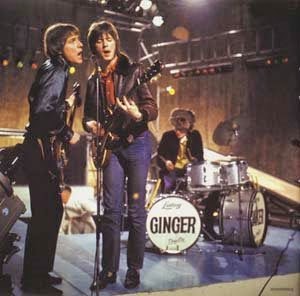
This week, we lost one of the greatest bassists of all time: Jack Bruce. Known primarily as a member of the British power trio Cream, Bruce was an innovative multi-instrumentalist, combining blues, rock, and jazz music. A classically trained cellist (with a scholarship to the Royal Scottish Academy of Music) who learned jazz as a teenager, he performed with several bands including John Mayall & The Bluesbreaker (where he met Eric Clapton) and Manfred Mann, eventually forming Cream with Clapton and drummer Ginger Baker. Gaining international recognition playing blues-rock and jazz-inflected rock music, Bruce sang most of the lead vocals, with Clapton backing him up (who eventually sang lead himself). Before breaking up in 1968, Bruce co-wrote most of Cream's single releases with lyricist Pete Brown, including the hits "Sunshine of Your Love," "White Room" (previously featured here) and "I Feel Free." In addition to solo albums, collaborative efforts with musicians continued as a theme of Bruce's career. The Scottish musician died of liver disease on October 25th at the age of 71.

Released in December 1966, "I Feel Free" was the first song recorded by Cream and their second hit single, reaching #11 in the UK. Written by Bruce (with lyrics by Pete Brown), this classic tune showcases the band's musical diversity, effectively combining blues rock with psychedelic pop.


Written by Bruce and Brown with Clapton, "Sunshine of Your Love" was released as a single in January 1968, becoming Cream's only gold-selling single in the US. Featuring Bruce's distinctive bass riff and Clapton's iconic guitar solo, it reached #5 in the America and #25 in the UK. After Bruce and Clapton attended a Jimi Hendrix Experience concert in London, Bruce returned home and wrote the riff that runs throughout the song. Clapton later wrote the song's refrain (which also yielded the song's title) and drummer Ginger Baker came up with the song's temp, which was based on African drumming. Ranked among Rolling Stones' 500 Greatest Songs of All Time, be sure to also check out the famous live performance of Cream's Farewell concert at the Royal Albert Hall in 1968 (here).

Farewell to incomparable Jack Bruce.

Thursday, September 20, 2012

People Got to Be Free

Protest Songs/Message Music: Part 2

Today's first protest song comes from one of our favorite roots rock bands Creedence Clearwater Revival, known for their dedication to homegrown American music. Released in September 1969, CCR released "Fortunate Son," a double A-sided single with "Down on the Corner," and first reached #14 on the US chart the week before Billboard changed its methodology on double-sided hits. Eventually, this track and its reverse side combined peaked at #3 by the end of the year, and ["Fortunate Son"] has since been ranked #99 on Rolling Stones' list of the "500 Greatest Songs of All Time."  This roots/blues rock song was popular during the Vietnam War and is included in several Vietnam films and video games. Written and produced by lead singer John Fogerty, it is the perspective of a man who is being drafted who is not "fortunate" enough to be the son of a Senator or a millionaire. Featured on The Ed Sullivan Show, here's an excellent live performance that sounds just like the recording! 
-------------------------------------------------------------------------------------------------------------------------
Before the dissolution of The Beatles, John Lennon and Yoko Ono formed a conceptual supergroup in 1969 called the Plastic Ono Band with various members including Eric Clapton (guitarist on the left in this clip), artist Klaus Voormann, future Yes drummer Alan White, and The Who's drummer Keith Moon, among others.Written by Lennon and recorded during his 'Bed-In' honeymoon, "Give Peace a Chance" was released in July of 1969 as his first solo single while still a member of The Beatles. Peaking at #2 in the UK and #14 in the US, this song quickly became the anthem of the anti-Vietnam War movement, and is one of Lennon's most famous songs to be included on the Rock & Roll Hall of Fame's list of the 500 Songs that Shaped Rock and Roll. Credited to the Plastic Ono Band (an identity to describe works by Lennon and Ono and anyone else who happened to be performing with them), here's a live performance in Toronto in '69, which supposedly gave Lennon the confidence to tell the other Beatles a few days later that he was leaving the band.
------------------------------------------------------------------------------------------------------------------------
Often referred to as the "British Bob Dylan," Scottish singer-songwriter Donovan covered this next protest song in the mid-60s. Originally written and recorded by Canadian singer-songwriter Buffy Sainte-Marie in 1964, "Universal Soldier" didn't gain much attention until the budding folk singer Donovan recorded his version and released it as a single in August of 1965, reaching #5 on the UK charts. Sainte-Marie said this folk song was about "individual responsibility for war and how the old feudal thinking kills us all." Since, this tune has been recorded by several other artists including The Highwaymen, Glen Campbell, Joan Baez, and Phil Ochs, as well as several foreign singers. Performing before a captive audience, here's Donovan's version of the consummate anti-war song.
---------------------------------------------------------------------------------------------------------------------------
We'll conclude today's post with an upbeat one by American blue-eyed soul group The Rascals (initially know as The Young Rascals). Becoming a big hit in the turbulent summer of 1968, "People Got to Be Free" spent five weeks at #1 in the US, as well as reaching #14 on the Billboard Black Singles chart, and eventually sold 4 million copies. Written by group members Felix Cavaliere and Eddie Brigati, this horn-punctuated plea for tolerance and freedom struck a particular chord in the wake of the assassinations of Martin Luther King Jr and Sen. Robert F. Kennedy. After the release of this song, The Rascals refused to tour on segregated bills, and if an African American act was not included at their concerts, the group would cancel several shows in protest. With Cavaliere on lead vocals and rock organ, here's another dynamic live performance by The Rascals in 1969.

Monday, May 2, 2011

The Heavy Second Wave

British Invasion: Part 9 (Second Wave, 1967-1970)

By 1967, the term 'roll' was generally dropped and the rock style of the 1960s emerged, also marking the end of the Invasion. However, from 1967-1970, the Brits did send off a much smaller 'second wave' of this newer rock sound (however, the official Second Invasion wouldn't take place until the 1980s). As the decade progressed, you can not only hear how much 'heavier' the music gets, but can also see a distinctive change in appearance, and boy, did hair get long! So hang on, we've got a whopping seven groups in this post!

First up, Cream was a British rock supergroup with bassist Jack Bruce on lead vocals, the bluesy guitarist/vocalist Eric Clapton (of The Yardbirds), and jazz-influenced drummer Ginger Baker, who created a hybrid of blues rock, hard rock, and psychedelic rock. They were the world's first notable and successful supergroup, selling over 35 million records in just the short two years that they were together. From their third album Wheels on Fire (the world's first platinum-selling double album), "White Room" was released as a single in September 1968, reaching #6 on the US charts and later becoming another among the 500 Greatest Songs of All Time. Recorded using an eight-track tape recorder (rare at the time), Clapton makes great use of the wah -wah pedal guitar effect on this classic psychedelic tune, a style he learned from fellow guitarist Jimi Hendrix. Here's live footage from their Farewell Performance in 1968.

----------------------------------------------------------------------------------------------
Joe Cocker was an English rock/blues musician known for his gritty voice and is ranked among the 100 greatest singers of all time. In 1968, he gained his biggest success with a radical re-arranged version of The Beatles' "With a Little Help from My Friends," which features a longer introduction, is in a slower, 6/8 meter, and uses different chords in the middle section. Reaching #1 on the British singles charts, this songs is considered one of the greatest music covers of all time, and is sometimes referred to as "The Wonder Years" song as it was the theme for that American TV series from the late 1980s. The Beatles were so impressed with this version that they gave Cocker permission to sing some of their other songs including "She Came in Through the Bathroom Window" and "Something." In the recording, Jimmy Page of Led Zeppelin played the guitar lines.

------------------------------------------------------------------------------------
Speaking of Led Zeppelin, they were another English rock group that formed in 1968 and are considered as influential to rock music of the 1970s as The Beatles were to the '60s. With a heavy, bluesy guitar-driven sound, they are founding fathers of heavy metal and hard rock, however, about a third of their music is acoustic and they drew from several other styles including Celtic, Eastern Indian, and folk music. Some sources say they have sold over 300 million records, making them one of the world's best-selling artists of all time. Consisting of guitarist Jimmy Page (of The Yardbirds), singer Robert Plant, drummer John Bonham, and bassist John Paul Jones, they were probably the biggest band of the 1970s. However, here they are early in their career in the late 1960s performing "How Many More Times." Definitely no "Stairway to Heaven" (1971), but interesting to see their beginnings.

---------------------------------------------------------------------------------------------
In 1967, the English rock group Traffic was formed by Steve Winwood (from The Spencer Davis Group), Jim Capaldi, Chris Wood, and Dave Mason, whose first singles were influenced by The Beatles. Initially starting out as a psychedelic rock group, they expanded their sound with the use of keyboards like the Mellotron, reed instruments, and included jazz and improv techniques in their music. Released in August 1967, the psychedelic pop classic "Hole in My Shoe" was written by guitarist Dave Mason (one of the chief songwriters with Winwood) and with its "Beatles-esque" sound, reached #2 on the UK charts. The little monologue in the middle was spoken by the stepdaughter of the boss of their record label, a simple effect, along with the sitar, that were typically traits of psychedelic music.

-----------------------------------------------------------------------------------------------
Like Led Zeppelin, Deep Purple was another English rock group from 1968 that are also considered pioneers of modern hard rock and heavy metal. Once listed in the Guinness Book of World Records for being "the loudest pop group," these guys are ranked among the greatest artists of hard rock and have sold over 100 million records worldwide. They have had many different personnel line-ups over the years and are still touring to this day. Their breakout success started with their first hit single "Hush," released in June 1968, reaching #4 on the US charts (though was overlooked in the UK). This song was originally performed by Billy Joe Royal (known for "Down in the Boondocks"), however, Deep Purple's hard rock version became better known and is still remembered today. Definitely a classic, however, I'm not a fan of the band's attire here.

----------------------------------------------------------------------------------------------
One of the most commercially successful and influential rock bands of all time was Pink Floyd, selling over 200 million albums worldwide. With their progressive and psychedelic rock music, they were known for their philosophical lyrics, audio experimentation, innovative album art, and their ornate live shows. Founded in 1965 by college students Roger Waters, Nick Mason, Richard Wright, and Syd Barrett, they got their start playing in London's underground club scene, and released their first single, "Arnold Layne," in spring of 1967. This psychedelic pop song was written by original frontman Syd Barrett, however, due to his unstable mental health, he was soon replaced by guitarist David Gilmour who was a part of the lineup when the band achieved worldwide critical success with albums in the 1970s such The Dark Side of the Moon and The Wall. Once again, it's interesting to hear the early sound of these mega groups-to-be in the 1960s.

------------------------------------------------------------------------------------------------
At last, we've reached the final group of the day: The Jimi Hendrix Experience. Okay, I know we're talked a little about guitar-wizard Jimi Hendrix before and we all clearly know that he was American, however, this "power trio" included Brits, bassist Noel Redding and drummer Mitch Mitchell, and originally formed in London. Not only influential to the development of hard rock and heavy metal, The Experience will always be known for the skill, style, and charisma of one of the greatest guitarists of all time as their frontman. The group came to prominence in the US after the infamous performance at the Monterey Pop Festival in 1967 where Hendrix set his guitar on fire. After seeing the Festival, The Monkees actually asked The Experience to go on tour with them as their opening act (definitely a mismatch!), but Hendrix and the guys only lasted a few concerts before they couldn't stand the 'boos' from the unappreciative teenage audience. Released as their first single in December 1966 (in the UK), the band's blues-rock version of "Hey Joe" failed to chart in the US, however has since become one of those 500 Greatest Songs of All Time and remains the most well-known version of this song.

Monday, April 25, 2011

"It's Not Unusual"

British Invasion: Part 7
Going on a third week all about the British Invasion, we begin another varied post with Lulu, the Scottish singer and actress who has been successful in the entertainment from the 1960's to present day. With her mature voice, she was signed to the Decca record label at the age of 15 and released her first single in 1965. The follower year, Lulu became the first British female singer to sing behind the Iron Curtain as she went on tour with The Hollies in Poland. With the help of producer Mickie Most (who also produced Herman's Hermits, The Animals, and Donovan), Lulu had her biggest hit song in 1967 with "To Sir, With Love," the theme song to a film with the same name in which she also acted in with Sidney Poitier. Reaching #1 in the US (although never released in its own right in the UK), this song (recorded with The Mindbenders) remained on the Billboard charts for five weeks, becoming the #1 pop song of that year. Another powerful live performance on the Ed Sullivan Show!

------------------------------------------------------------------------------------------------
Another solo artist from the British Invasion, Welsh singer Tom Jones is known for his powerful voice and has sold over 100 million records since 1965. Like Lulu, who sang the theme for the James Bond film The Man With the Golden Gun, Jones also sang the theme to another Bond film, Thunderball. Influenced by American soul music, Tom Jones was first the frontman for a Welsh beat group, but after being spotted by a London-based manager, he became a solo act and gained his first international hit with "It's Not Unusual" released in January 1965. The BBC refused to play this song initially and thus was first made popular by a pirate radio station. With the brass-heavy accompaniment and Jones' sexy image, this tune eventually became a big hit on the US and UK airwaves, reaching the Top-Ten, and has since become his signature song. A commonly heard phase around here, this is definitely another classic tune!

---------------------------------------------------------------------------------------------
From Birmingham, England, another British beat band among the "Invaders" was The Spencer Davis Group. Signing their first recording contract in 1964, the group consisted of Welsh guitarist Spencer Davis joined by lead vocalist/organist Steve Winwood (who went on to form Traffic in 1967, followed by a solo career) and his bass-playing brother Muff Winwood, completed by Pete York on drums. Released in October 1966, one of their best known songs was "Gimme Some Lovin,'" written by Davis and the Winwood brothers (Steve Winwood was only 18 at the time). Earning the gold disc, this blue-eyed soul/rock tune is ranked among the 500 Greatest Songs of All Time. I'm not gonna lie; this song will always remind of the film The Blues Brothers (and yes, I realize that was a cover version from 1980), nonetheless, it's very clear why this song is among the greatest.

----------------------------------------------------------------------------------------------
We'll finish off today's post with the English rock band, The Yardbirds, a group known for having started the careers of three of the top greatest guitarists of all time: Eric Clapton, Jeff Beck, and Jimmy Page (later of Led Zeppelin). A blues-based group that ventured into pop and rock, The Yardbirds have been considered one of the most impressive guitar groups in rock history as they were guitar-playing innovators, exploring effects like fuzz tone, feedback, distortion, backwards echo, etc. In February 1965, they released their first major hit "For Your Love," selling over a million copies and earning the gold disc as well. Despite its success, blues purist Clapton was not happy with their pop route and left the group (forming Cream the following year), being replaced by Beck, and later Page took over lead guitar. With lead singer Keith Relf probably being one of the first rock star to unnecessarily wear sunglasses indoors, this live performance is a real treat.